


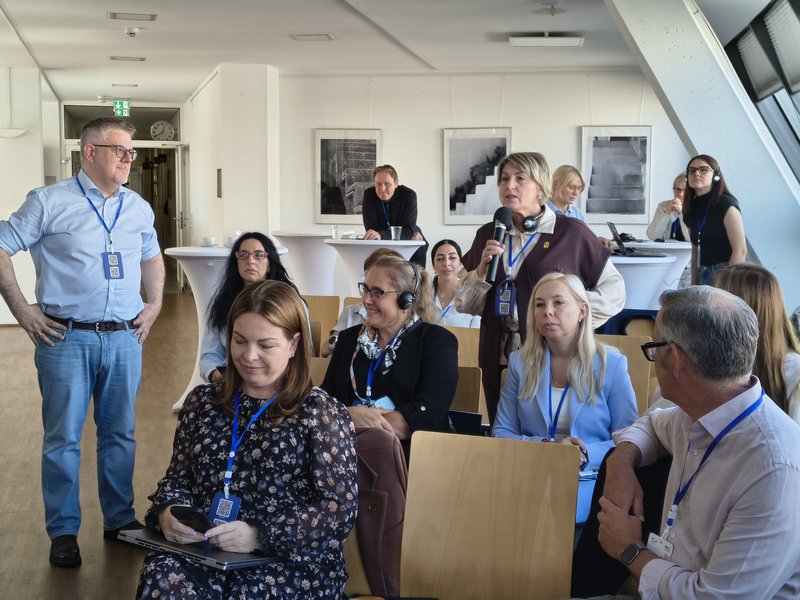
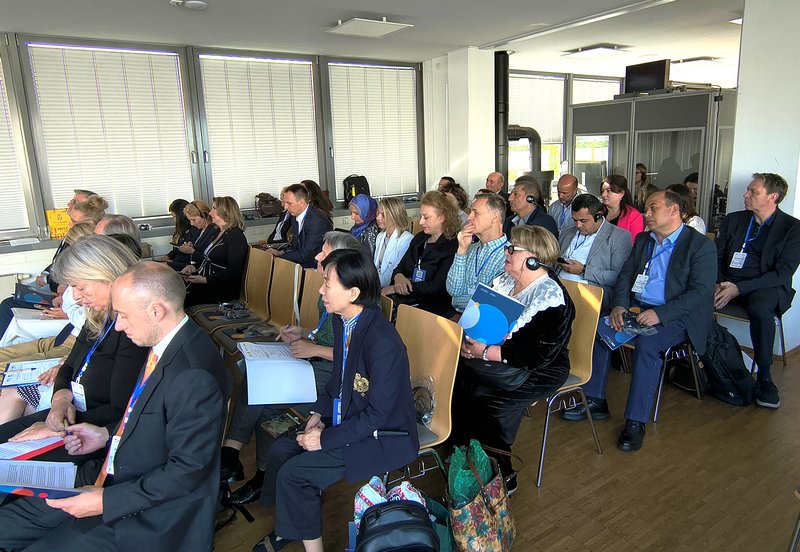
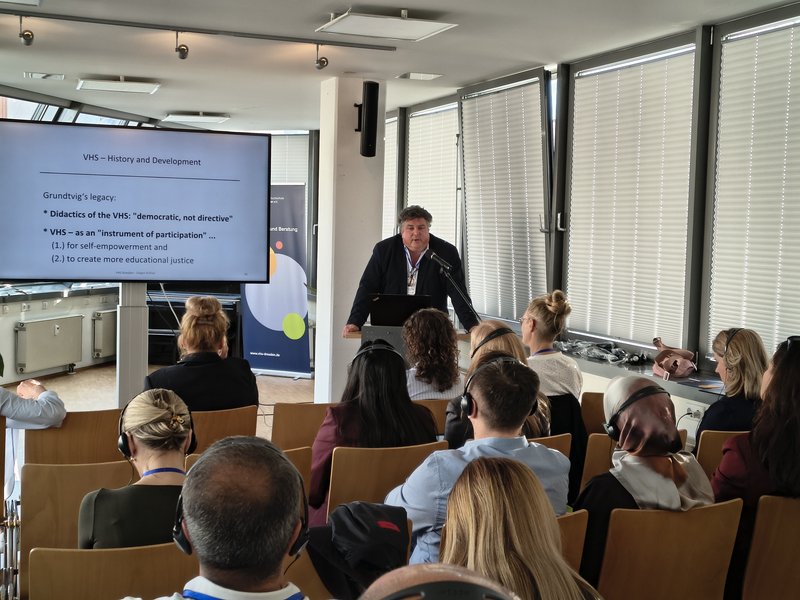
From 29 to 30 September 2026, the Continental Exchange Project, in partnership with the UNESCO Institute for Lifelong Learning (UIL), the City of Dresden, and Volkshochschule (vhs) Dresden, organised the Conference ‘Adult Learning and Education as a Responsibility of Local Authorities’ in Dresden. The event brought together almost 60 representatives of local authorities, civil society organisations, academia and other local and national ALE-stakeholders from the countries in the project region (Armenia, Bosnia and Herzegovina, Georgia, Kosovo, Moldova, and Ukraine) and additionally from Germany, Poland, South Korea and others.
The main goal of the Conference was to provide an opportunity for representatives of local authorities and partner organisations to share their best practices of ALE promotion and lifelong learning, to participate in professional exchange and to jointly reflect on approaches and challenges in the field. The Conference aimed to provide participants of the event with impulses and ideas for further actions in their own contexts.
A central part of the Conference was the exchange of practical experience from different countries and cities.
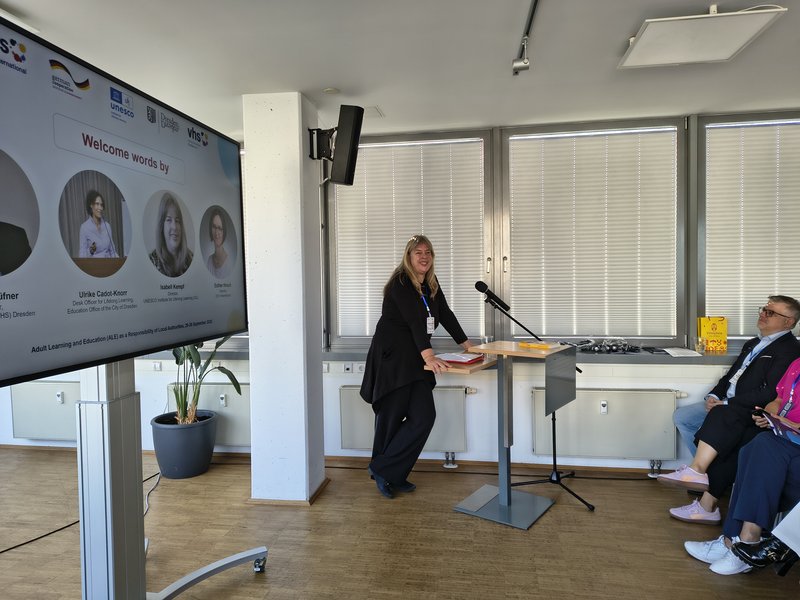
The first day started with opening remarks delivered by Jürgen Küfner (Director of vhs Dresden), Ulrike Cadot-Knorr (Senior Desk Officer for Lifelong Learning, City of Dresden), Isabell Kempf (Director of UIL) and Esther Hirsch (Acting Director of DVV International). In their keynotes and presentations, Isabell Kempf, Alexander Howells (Consultant for UIL) and Prof. (H) Dr. Heribert Hinzen (UIL Honorary Fellow) framed the Conference, focusing on the role of local authorities in ALE development, especially taking into consideration common challenges, such as international conflicts, climate change and major economic shifts.
In her keynote, Isabell Kempf framed one of the conference's central question:
“Our cities are going to change, whether we plan for it or not. What we can influence is whether people get the chance to learn their way through that change, and whether they do it together or alone.”
– Isabell Kempf, UIL-Director
The second session focused on international best practices. Susanne Lattke (Research Associate at DIE) and Prof. Dr. Choi Un Shil (Chairperson of the Korea Lifelong Education Foundation) presented recent developments in the field in their respective countries. Andrew Peter Brady, the hired expert, also presented preliminary findings from a Social Return on Investment (SROI) analysis of adult education centres in Georgia and Armenia.
The second half of the day was dedicated to the exchange of good practices between participants. They were divided into two groups for parallel sessions, with four presentations in each group. This ensured that all country delegations had the opportunity to present their experiences, receive feedback and learn from each other. Participants presented examples of successful cooperation between adult education providers and municipalities, on local policy developments, and on ways to strengthen learning opportunities in their communities.
The day ended with an interactive joint discussion about the main outputs and takeaways. Attendees shared their highlights, ideas, observations and challenges. One finding stood out: there is no one-size-fits-all model. Responsibilities, legislation and financing differ from country to country. Everywhere, however, strong partnerships and local commitment proved essential.
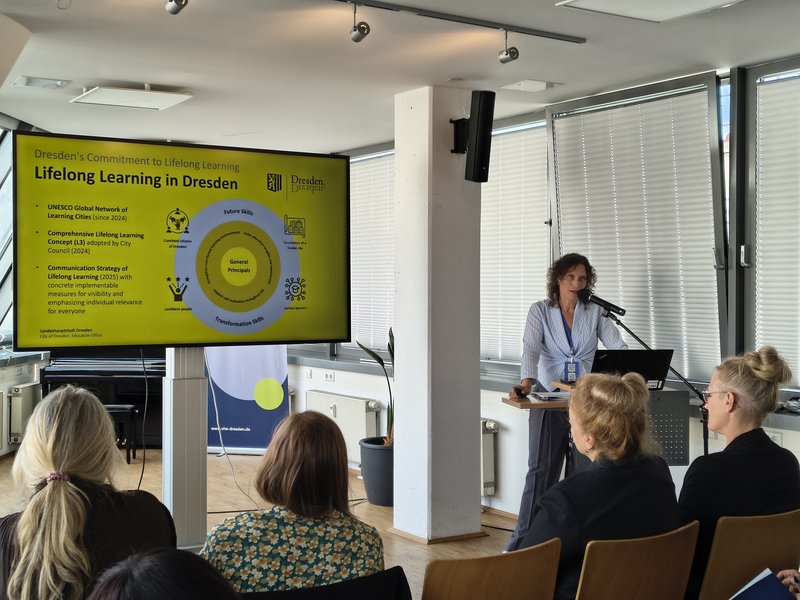
The second day focused on Dresden itself. The city has been part of the UNESCO Global Network of Learning Cities since 2024 and has since built up a range of lifelong learning opportunities. Jan Donhauser, first Mayor and Councillor for Education, Youth and Sports, welcomed the guests. Afterwards, Ulrike Cadot-Knorr (Desk Officer, Lifelong Learning Office for the City of Dresden) and Lena Leubner (Director of the Central Library of the City of Dresden) presented the good practices their institutions apply to promote lifelong learning at the local level.
The Conference concluded with a visit to the Kulturpalast, which is home to the city library, the Dresden Philharmonic Orchestra, and the COSMO Science Forum. There, participants observed how local cultural and educational institutions promote learning and civic engagement.
The Regional Conference was financially supported by the German Federal Ministry for Economic Cooperation and Development (BMZ).