


On 2 July 2026, the European Training Foundation (ETF), in collaboration with DVV International, organised a regional webinar entitled "Financing of Adult Learning – Which are the Missing Links?" The event was held within the framework of the Governance Learning, Action and Dialogues (GLAD) network, which supports system-level reforms in vocational education and training (VET), lifelong learning (LLL) and employment policies across EU partner countries.
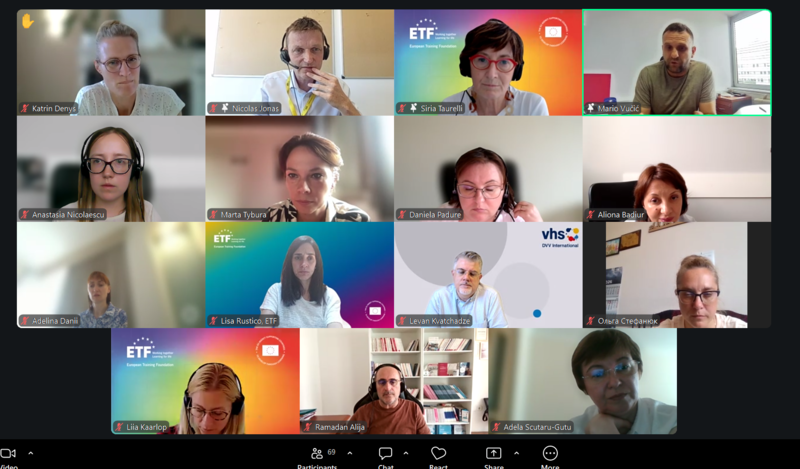
The webinar brought together 71 policymakers, representatives of public educational institutions, civil society organisations, think tanks, practitioners and international adult learning and education (ALE) experts to exchange experiences on one of the most pressing challenges facing the sector - sustainable financing.
Opening the webinar, Nicolas Jonas (ETF) highlighted the growing importance of financing as a cornerstone of effective adult learning systems. While many countries have recognised the strategic role of lifelong learning in supporting economic resilience, social inclusion and human capital development, adult learning continues to receive insufficient and fragmented financial support. He emphasised that financing should not be viewed in isolation but as an integral part of broader governance processes, including strategic planning, legislative frameworks, data collection, and institutional cooperation.
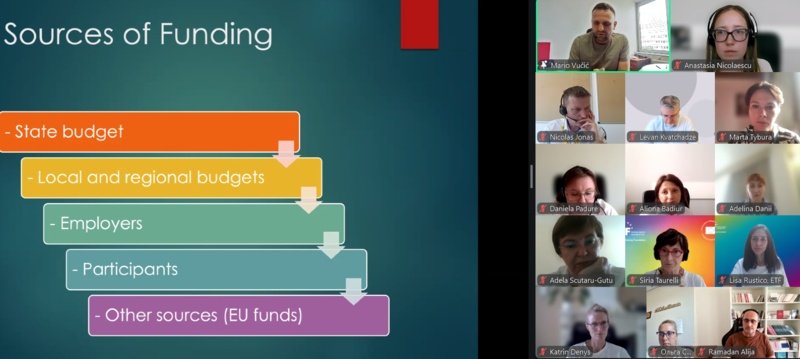
Levan Kvatchadze (DVV International) provided participants with an overview of the main approaches to financing adult learning and education. His presentation explored different financing models and funding mechanisms used internationally, demonstrating how diversified financing can contribute to more accessible, equitable and responsive adult learning systems.
The webinar's country case focused on Croatia, where Dr. Mario Vučić, Deputy Director for the Development of Adult Learning and Education at the Agency for Vocational Education and Training and Adult Education, presented the Croatian experience in financing adult education through individual educational voucher model. Participants had the opportunity to discuss both achievements and remaining challenges, drawing parallels with the situation in their own countries.
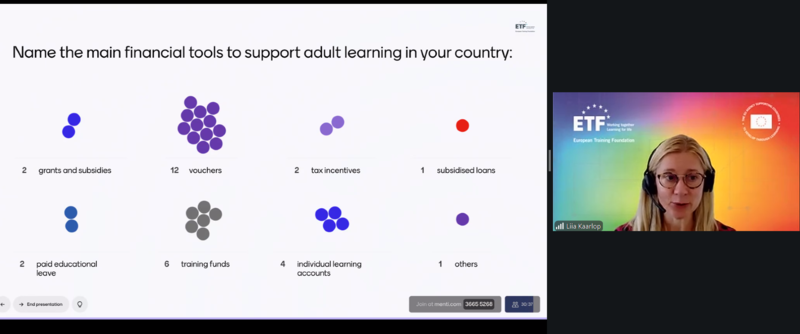
The interactive part of the event was moderated by Lisa Rustico (ETF), who invited participants to reflect on the institutions and financing models implemented in their respective countries to identify common patterns and shared challenges. During this session, ETF also introduced its newly developed Adult Learning Factsheets covering Albania, Bosnia and Herzegovina, Kosovo, Moldova, Montenegro, North Macedonia, Serbia and Ukraine. Participants were also informed about a follow-up webinar that will present the latest ETF and DVV International publications on adult learning and education.
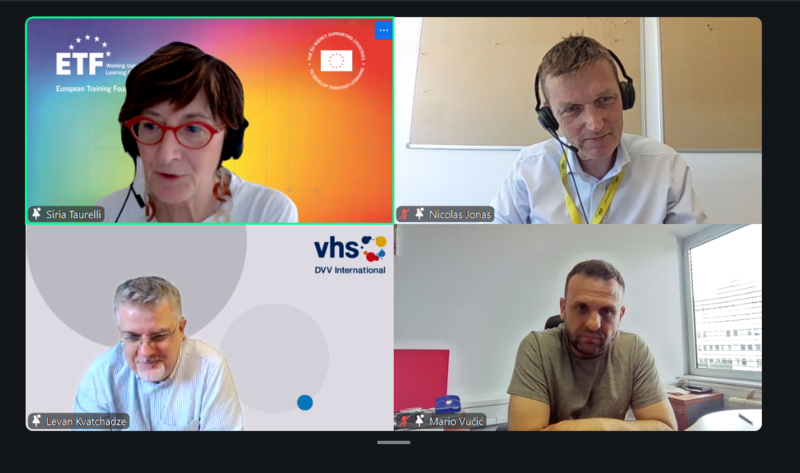
The second part of the event featured a panel discussion moderated by Siria Taurelli (ETF), during which Nicolas Jonas, Levan Kvatchadze and Dr. Mario Vučić exchanged perspectives on financing models and practical solutions for strengthening adult learning systems. The discussion confirmed that although financing remains a common challenge across countries, sustainable investment depends on political commitment to prioritising ALE, supported by clear legislation, effective institutional coordination, reliable data and strong partnerships among public authorities, employers, civil society and education providers. The role of the local level was specifically highlighted, particularly in ensuring outreach and access to learning opportunities.
The webinar concluded with a shared recognition that improving financing mechanisms is essential for creating inclusive, resilient and future-oriented adult learning systems. Participants also emphasised that decision-makers at both national and local levels need to recognise that ALE is not a cost, it is an investment. Continued advocacy efforts therefore remain essential. ETF and DVV International reaffirmed their commitment to supporting policy dialogue, mutual learning and regional cooperation through the GLAD network and future joint initiatives.